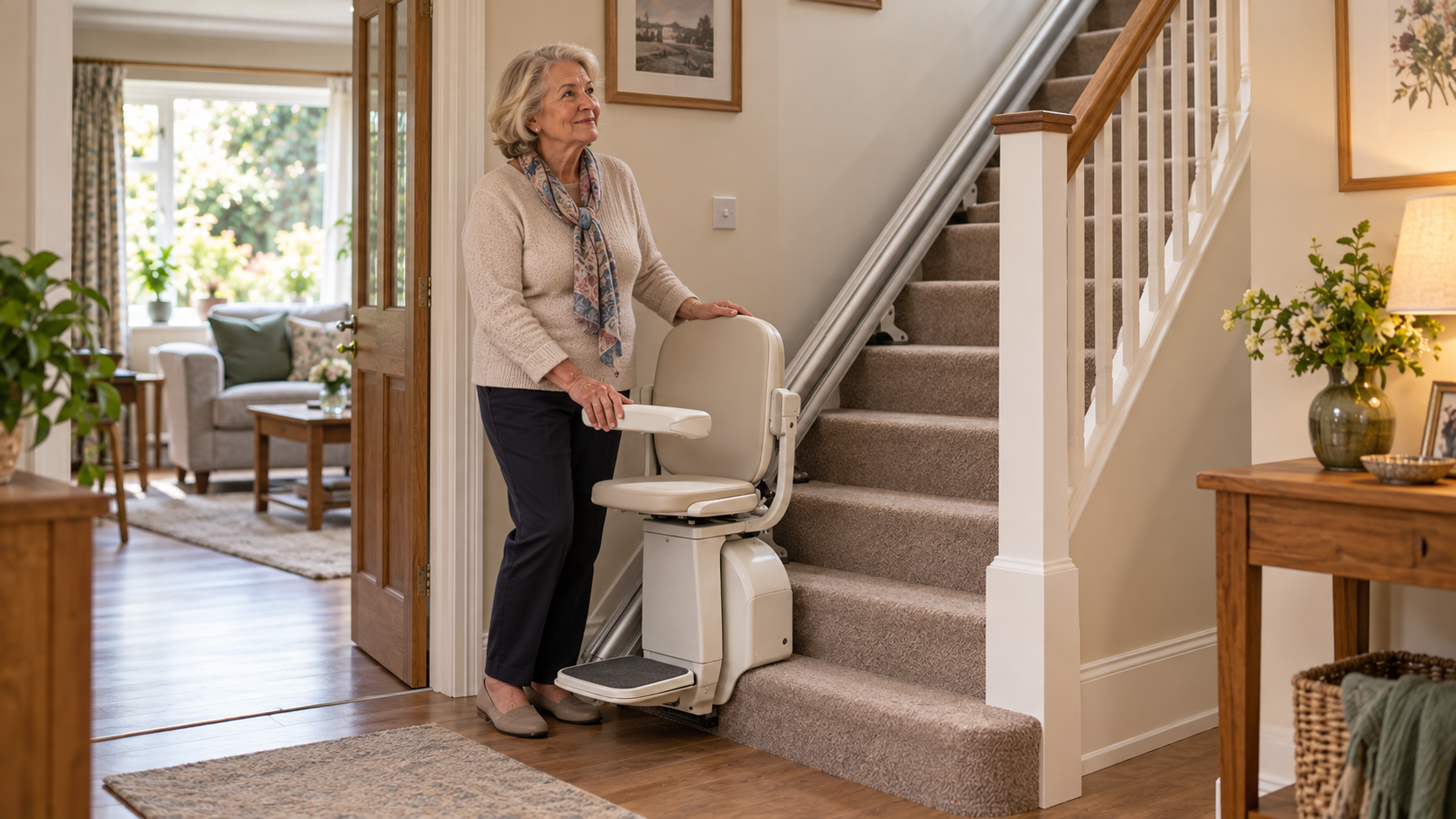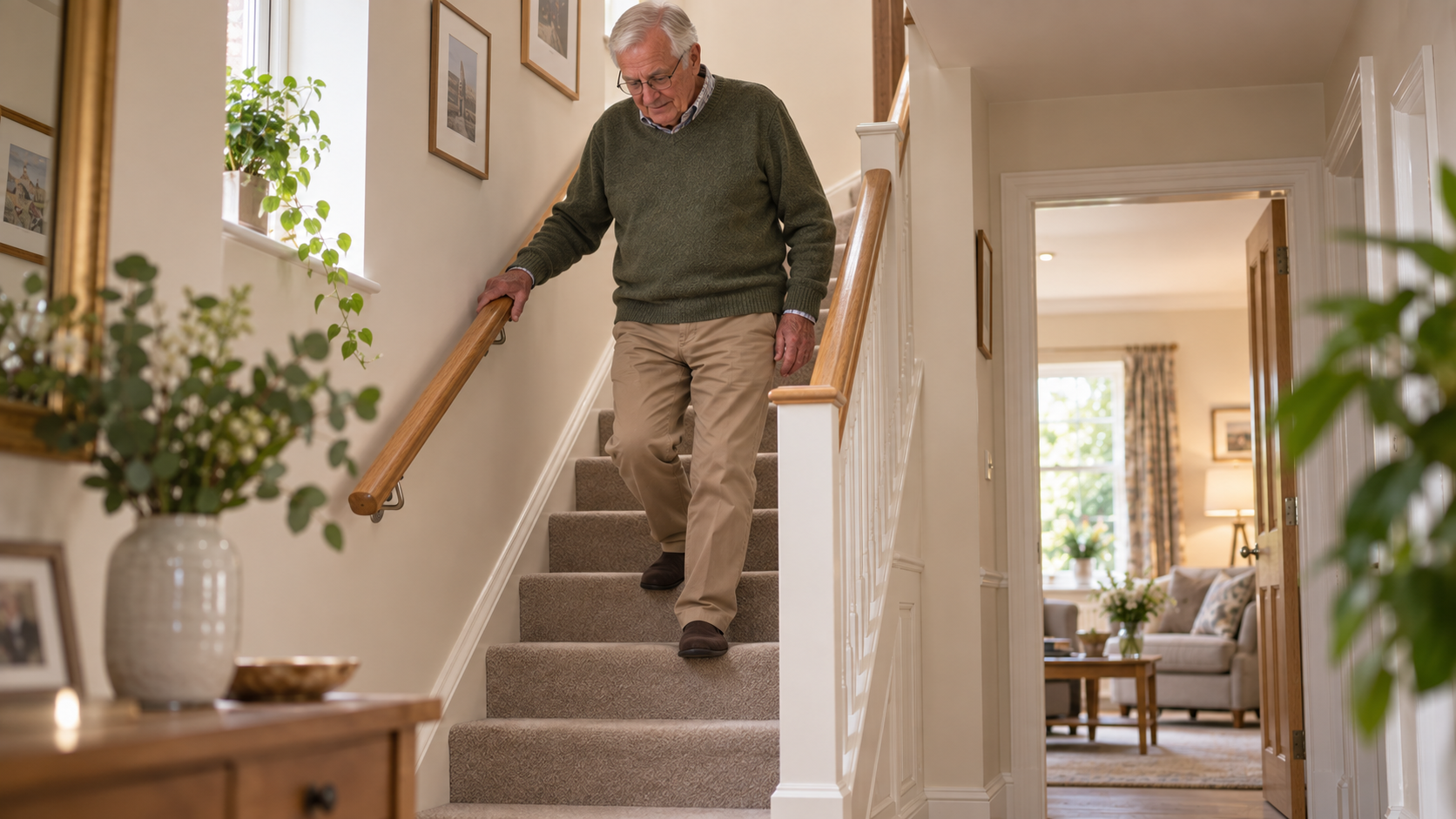
Start with the staircase and how you use it
Look at the shape and width of the staircase, the space at each end and whether you want to keep the stairs clear for other people. An extra handrail may be enough in some homes; in others, a stairlift or home lift is the more practical route.
A stairlift is often the simplest powered option
A stairlift is often the simplest powered option where a seated lift suits the user and the staircase. Straight stairs are generally simpler to deal with. Curves, half-landings and unusual starts or finishes make the installation more involved.
When a home lift starts to make sense
A home lift may be worth considering where wheelchair access is needed, where a stairlift would be awkward to use, or where the household simply prefers a lift that carries a person between floors without using the staircase. It normally costs more and may need building and electrical work.
Do not forget the top and bottom of the stairs
People quite rightly focus on the journey. Getting on and off matters just as much. Check the space at both ends, doors close to the rail, radiators, bannisters, and whether you would be stepping off near the edge of the stairs.
Look at the whole route
A sensible survey should consider how the lift is approached, where it parks and how much of the staircase remains usable for everyone else. A neat-looking installation is not automatically the most practical one.